Side project
Quiet Table is a taste-driven restaurant finder for you and your mates.
Hypothesis
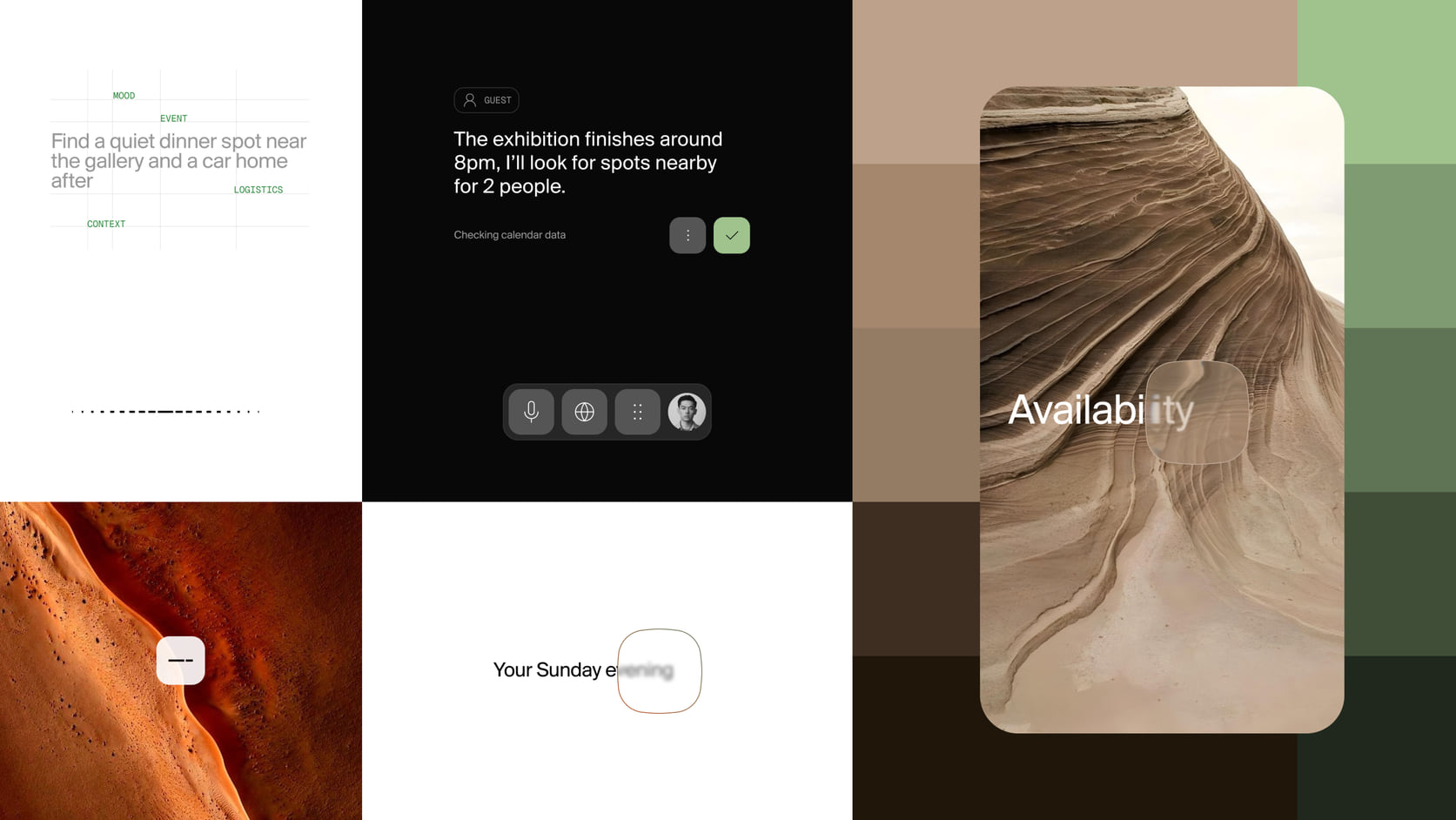
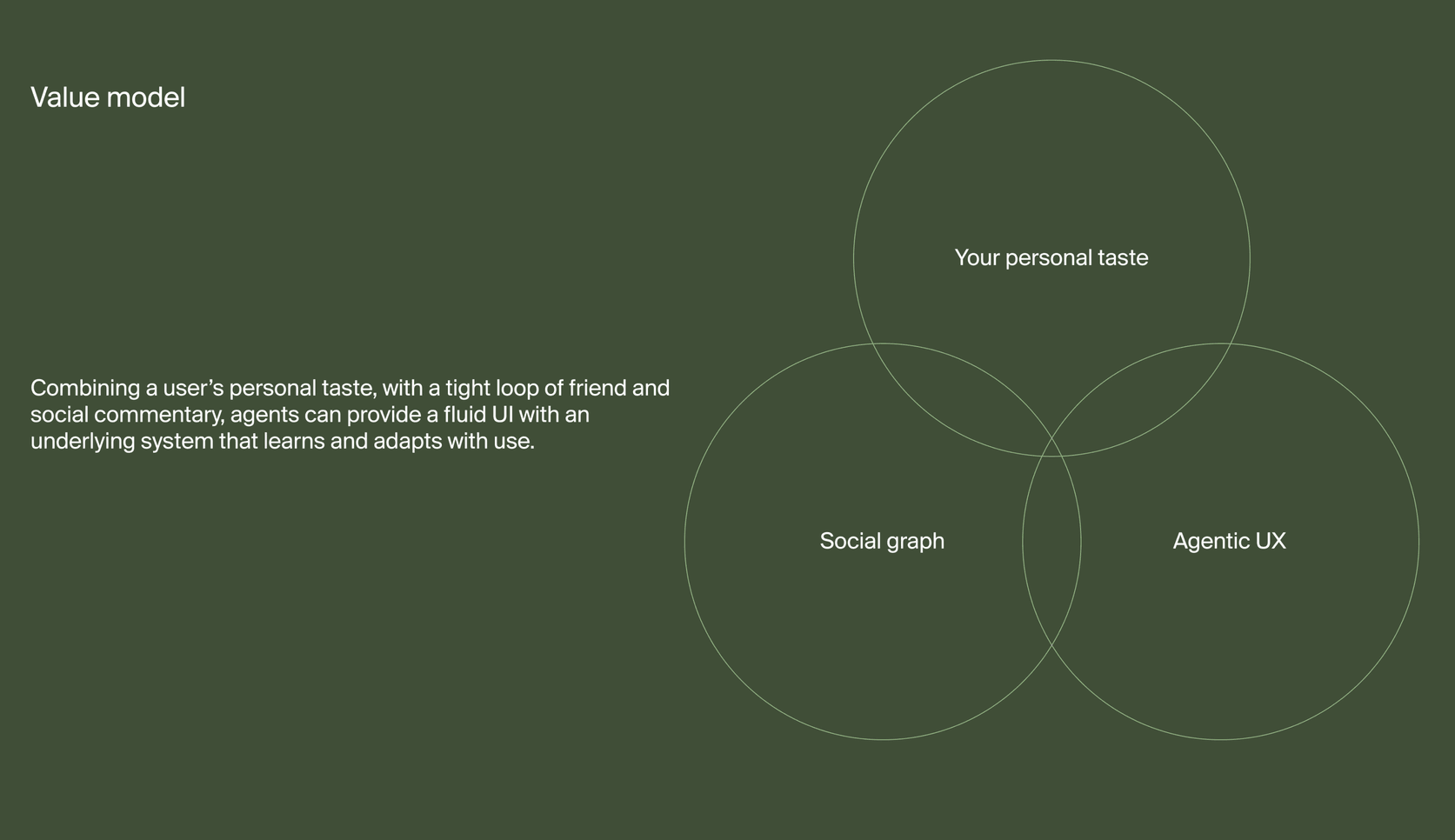
The future of agent-powered user experiences isn’t only a chat box. Efficiency, delight and precision come from the user and the product having shared information, context and data. I see this as a taste profile. A brand-first product will mix agent, personalisation and brand moments to enrich the UX, forming new patterns, content and UI when needed.
Goal
To learn by building: an agentic UX for a simple, common use case.
Focus
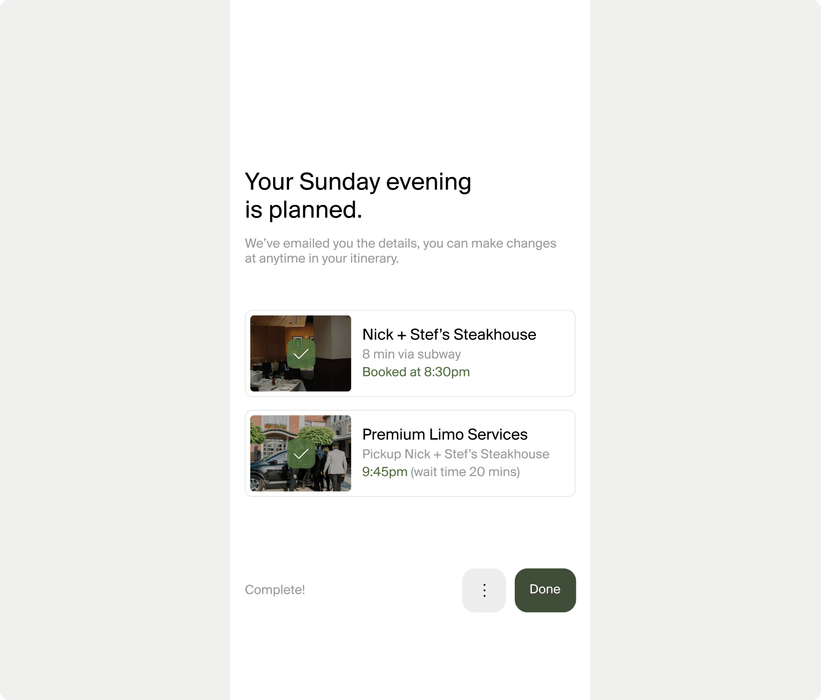
Finding a good restaurant based on your tastes, patterns and friends.
Great places to eat, especially in unfamiliar cities, can be hard to find. Where people eat says a lot about them. Like fashion and music, it’s a flex and part of their social currency. Somewhere between Michelin stars, Instagram, Beli and maps apps, I believe there’s space for a restaurant finder that adds to it whilst being genuinely helpful for others in your social circle.
Notes
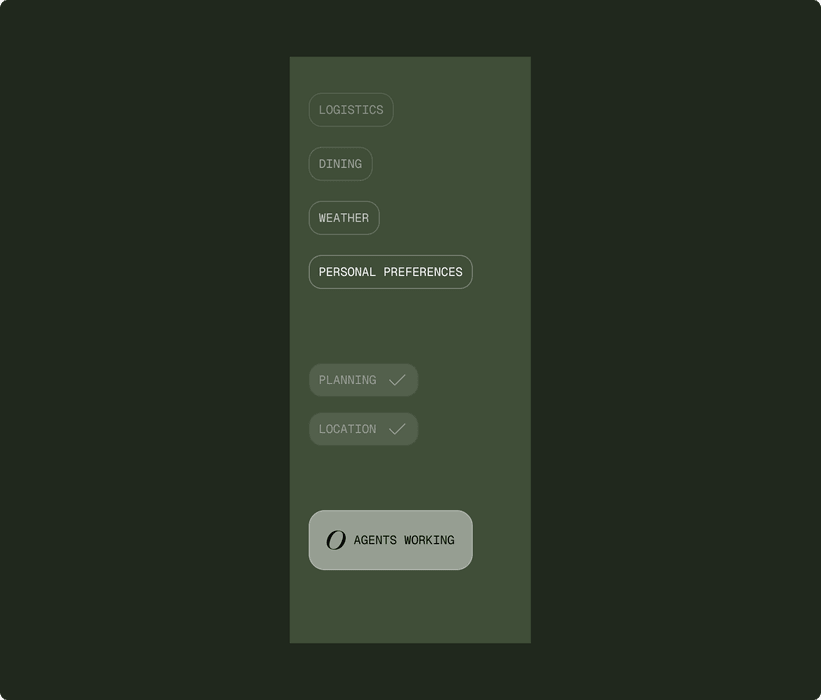
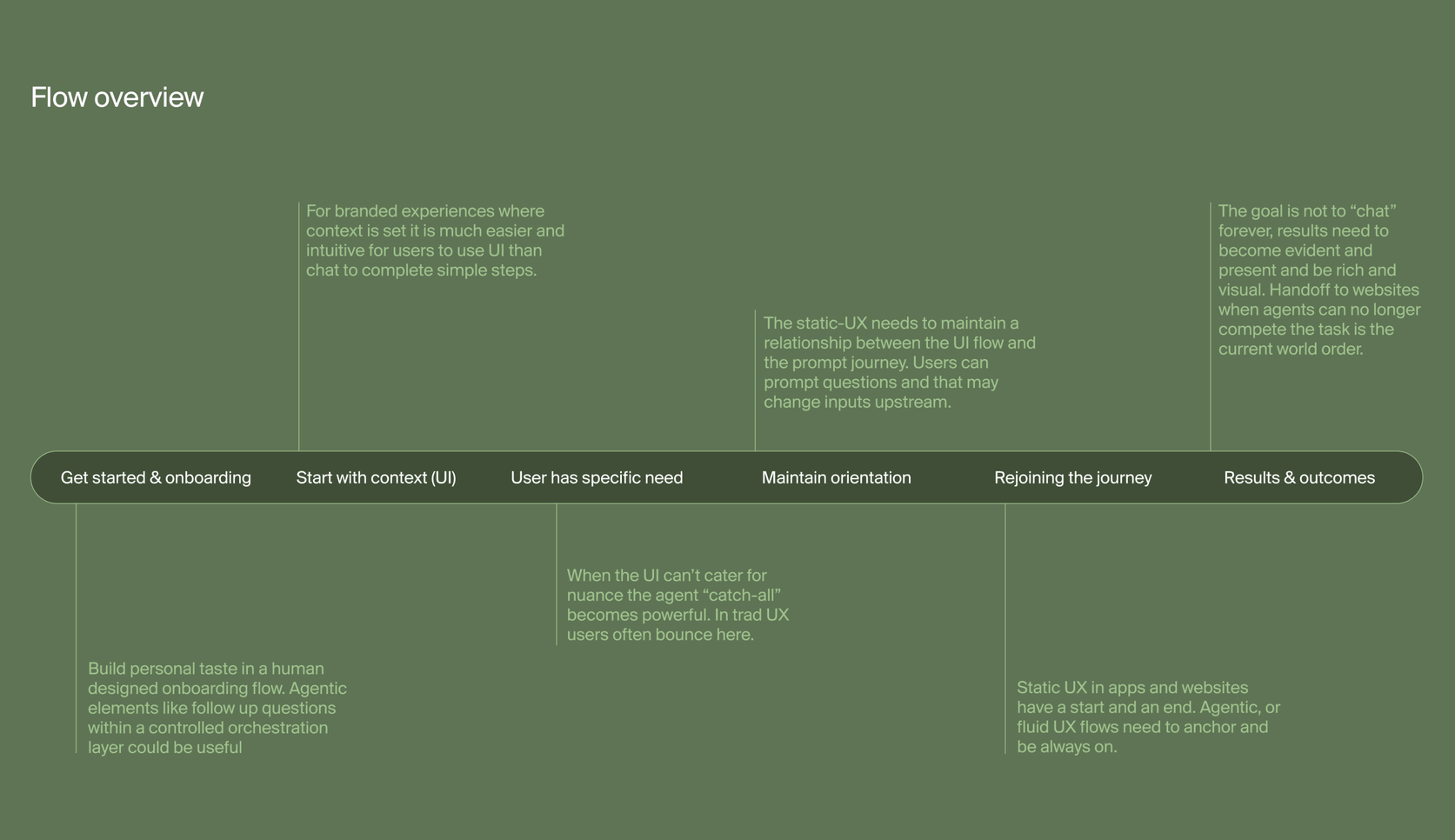
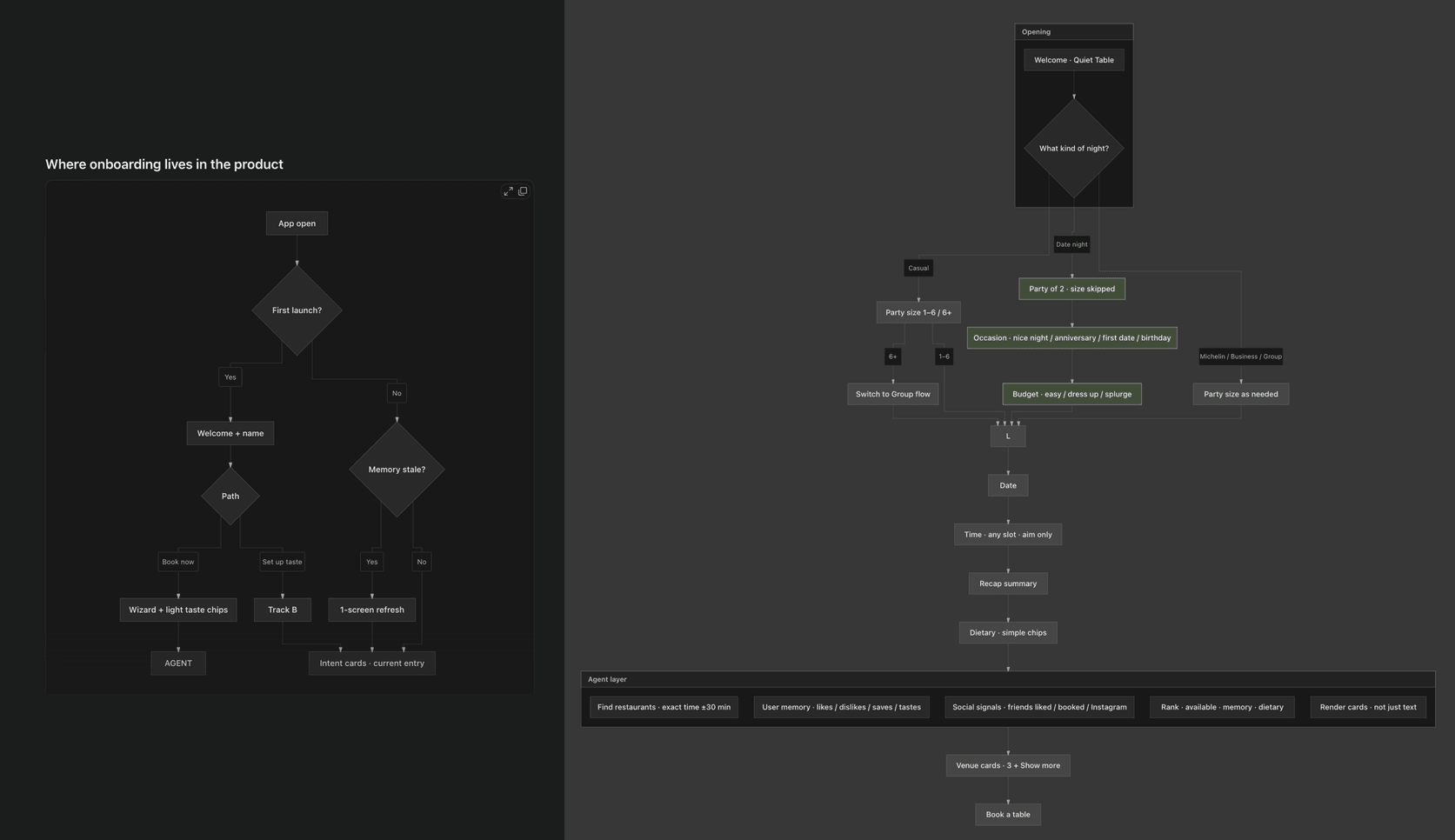
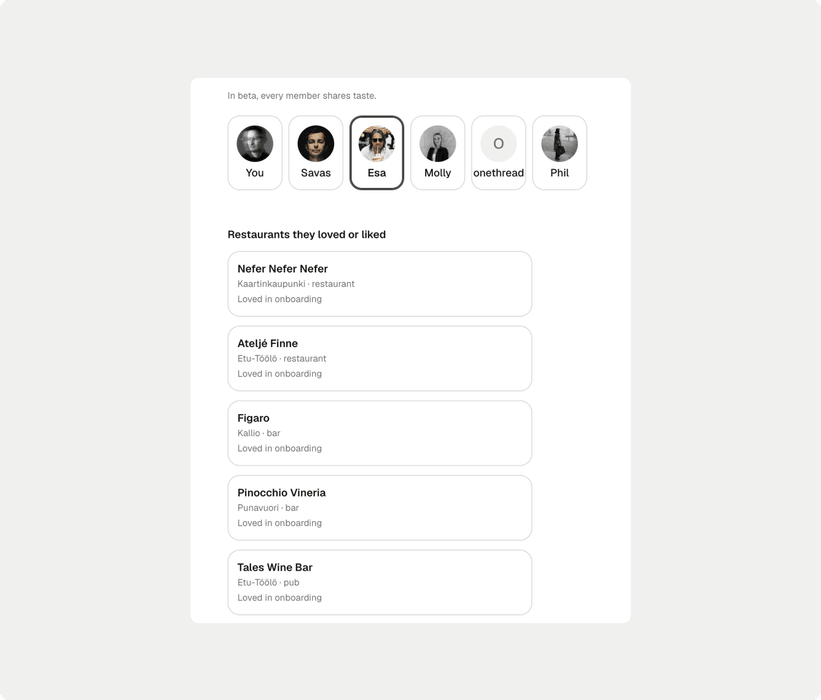
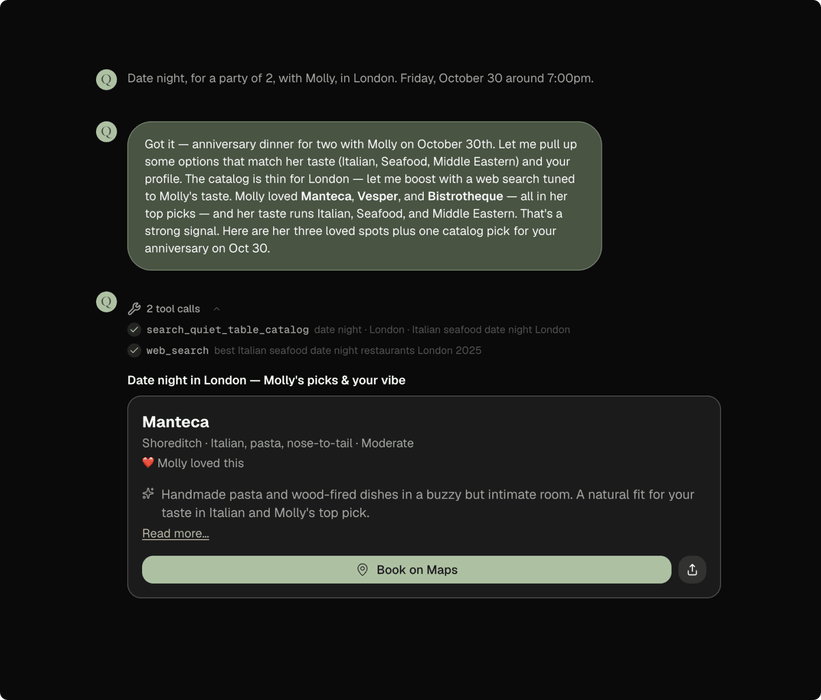
Designing the agents’ layers of thinking: context, location and dining needs. The system pulls from the user’s calendar and preferences to present a next step that feels personal, yet surprising.
Stack
Claude, Astryx Design System, Figma, Clerk, V0, GitHub
Research
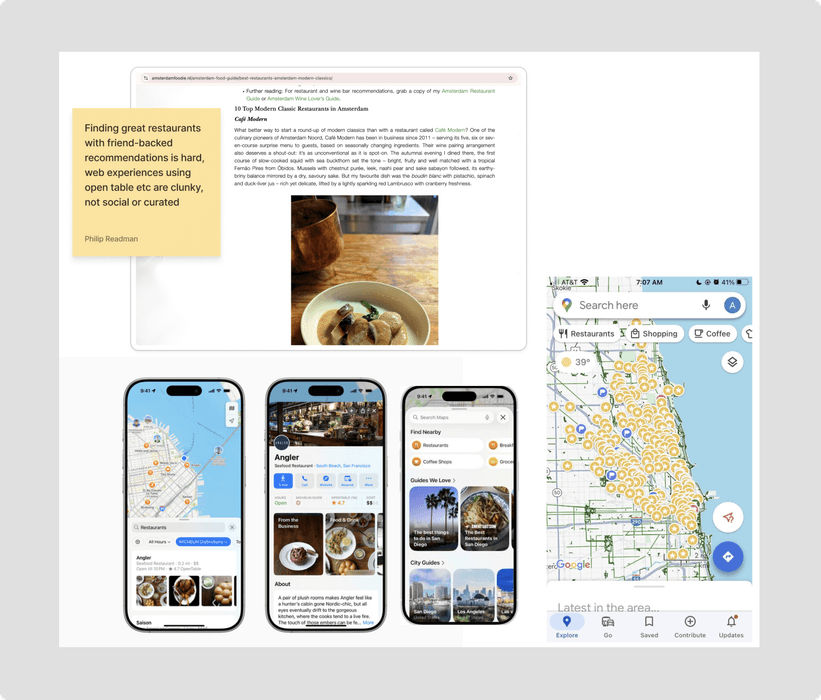
The opportunity is real. Beli is growing fast in the US (120 million restaurant ratings). Google and Apple Maps lists are neither inherently social nor discovery-driven. Review systems are outdated and unreliable. There’s space for a fun, taste-driven foodie UX.

Agent logic
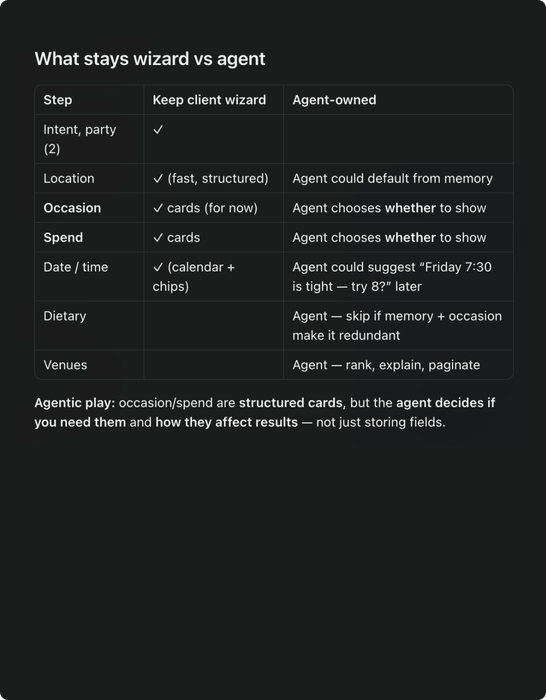
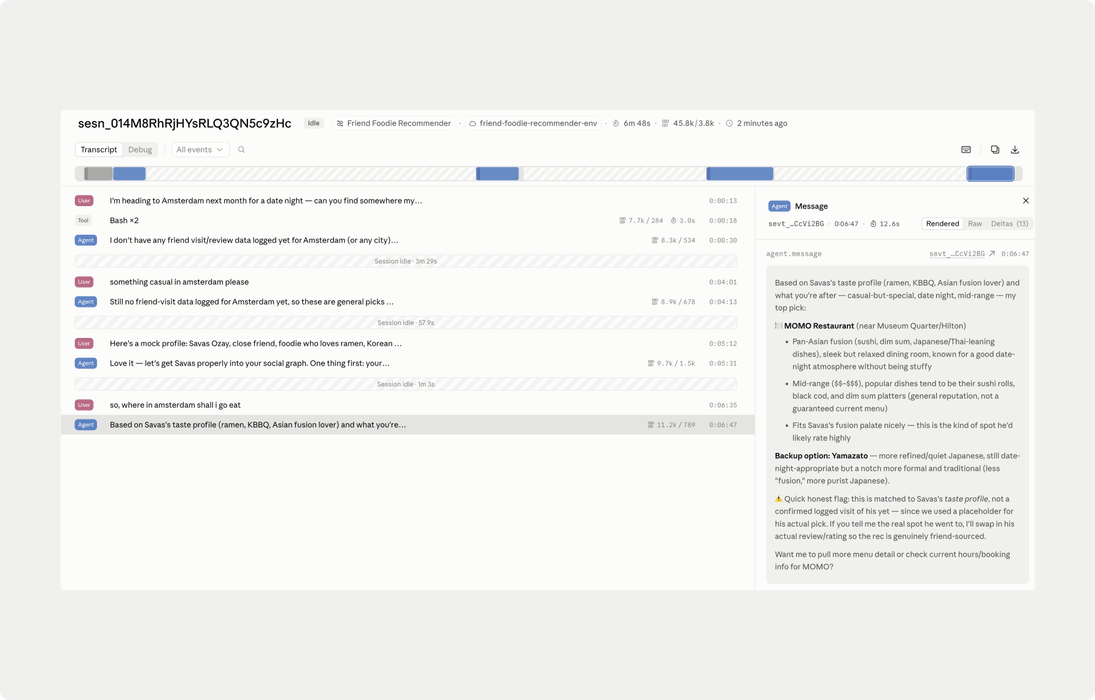
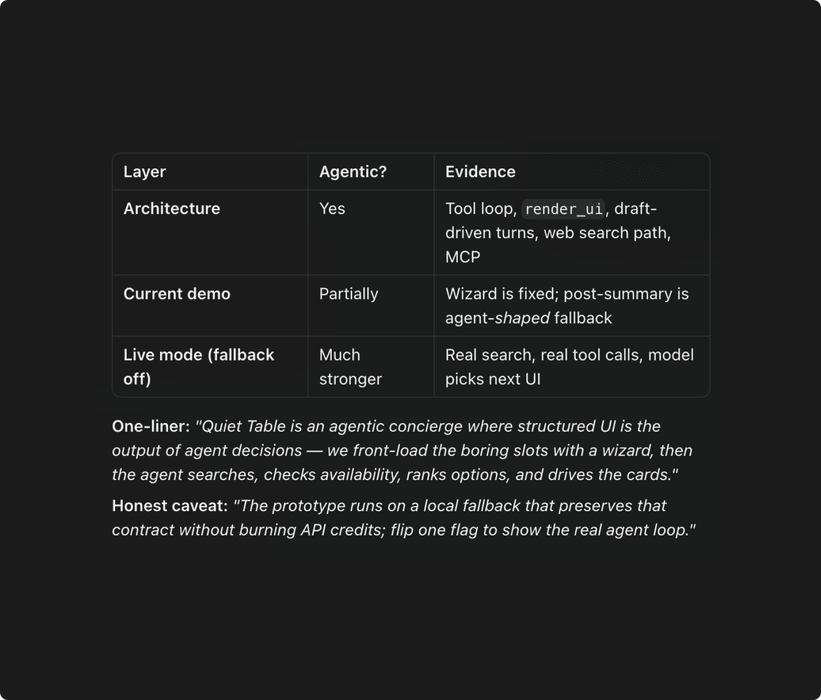
How might we control the agent’s responses, and build a system that actually considers a user’s taste and preferences?
UI
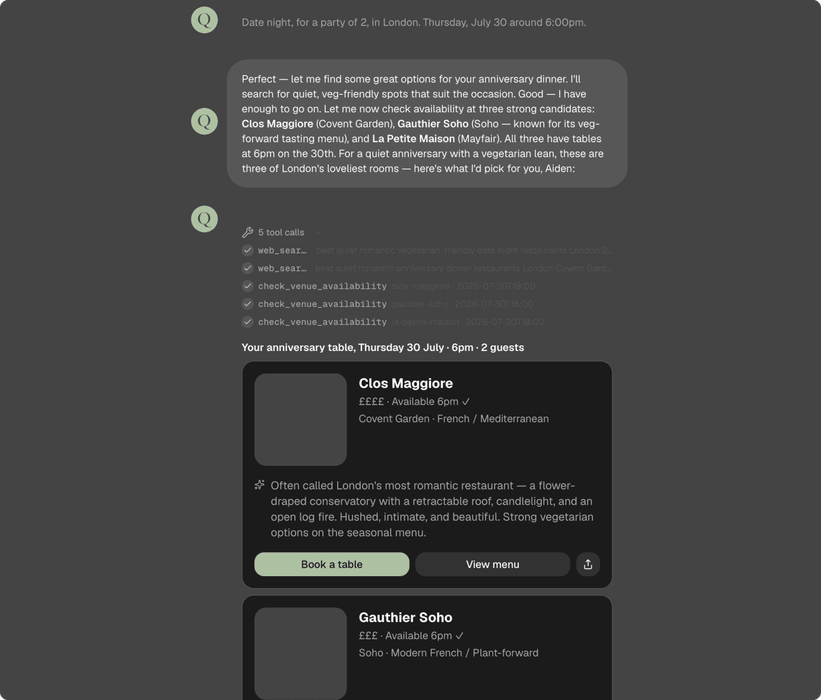
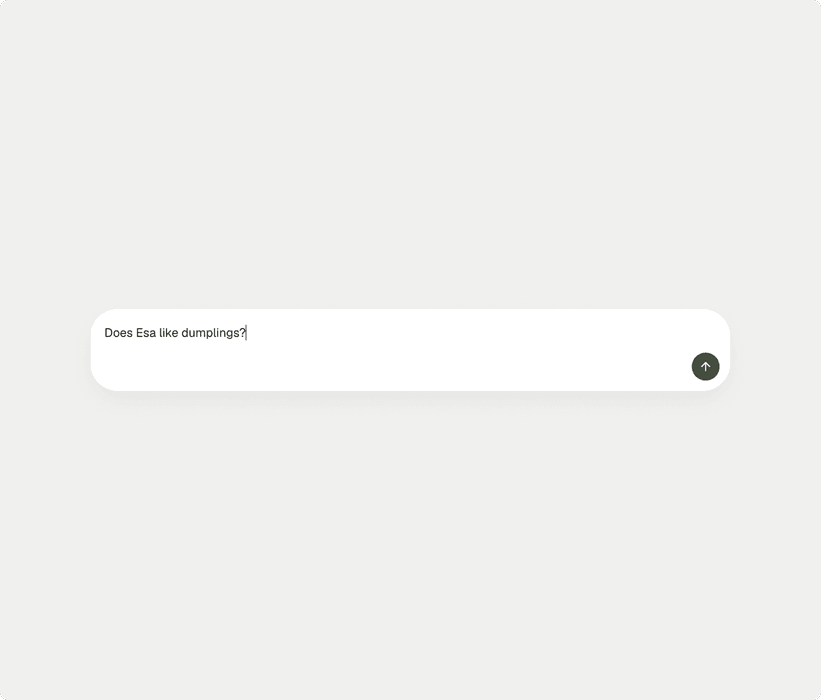
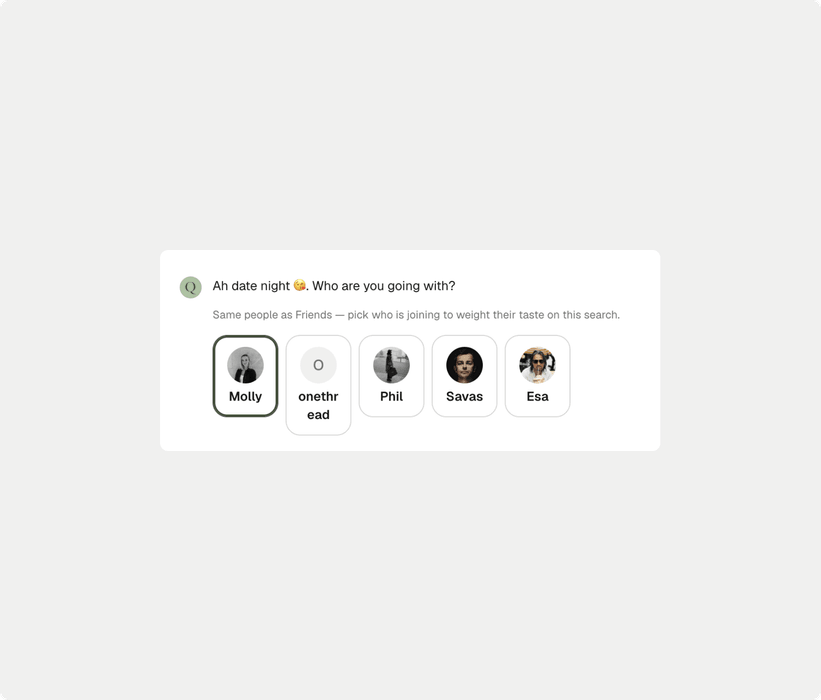
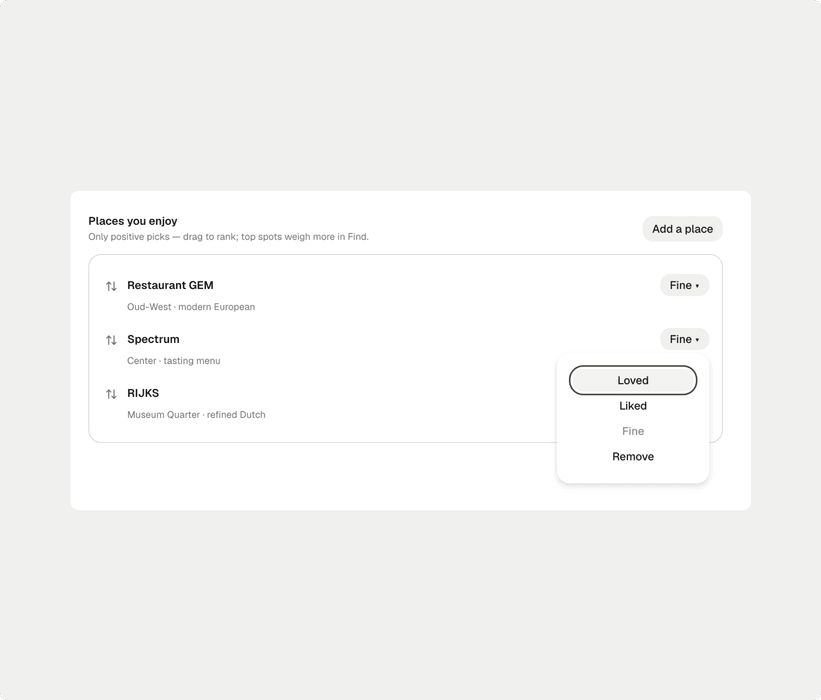
Meta’s Astryx is an open-source design system that’s fully customisable and agent-ready. I wanted the system to produce the right UI elements based on user requests. Designing a vertical flow is easy enough: you can tell the wizard which components to use, like time cards or calendar pickers.
When a user leaves the set vertical flow, knowing which component to surface becomes more difficult for Astryx. ChatGPT 6 recently released “Intelligent UI”, solving for exactly this pattern.
Brand
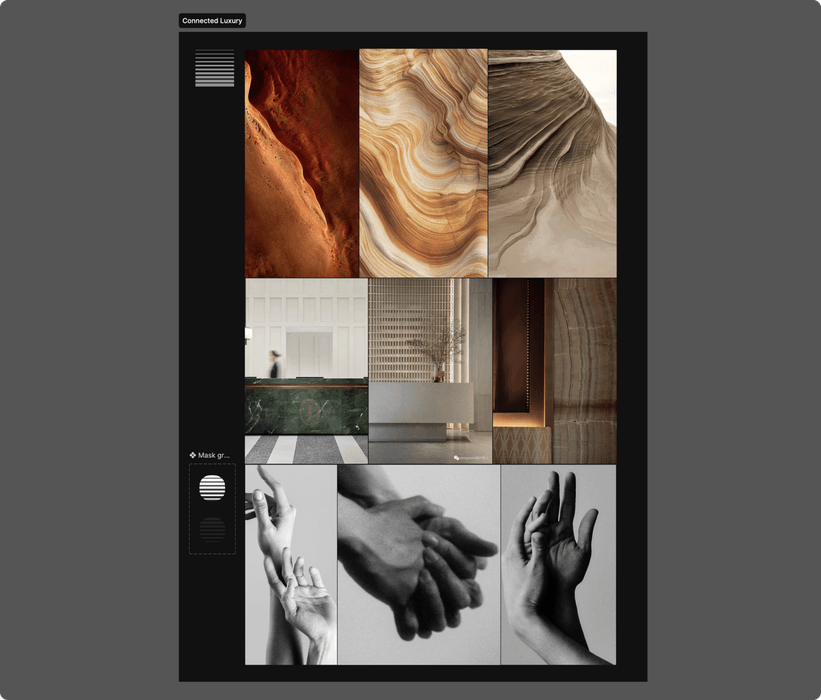
Leading up to this project, I also wanted to think about what a high-end lifestyle app could feel like if it were to scale: what sort of look and feel builds trust, feels solid and hints at luxury.